BeardLava
Man with a thick well-groomed beard in warm amber light against a dark background

Built for coarse beards, not catalog beards

Your Beard Isn't the Problem. Your Oil Is.

Most beard oil is built for the beard men wish they had: fine, cooperative, already soft. If yours grows in coarse and wiry — the kind that curls back on itself and scratches your collar — a few drops of thin carrier oil disappear on contact and change nothing. By noon the itch is back, the flake is back, and the bottle on your shelf is just expensive fragrance.

BeardLava starts from the coarse beard and works backwards. Heavier butters where the shaft needs sealing, lighter esters where the skin needs breathing room, and a routine measured in minutes because nobody keeps a twenty-minute grooming ritual past week two.

Get the routine
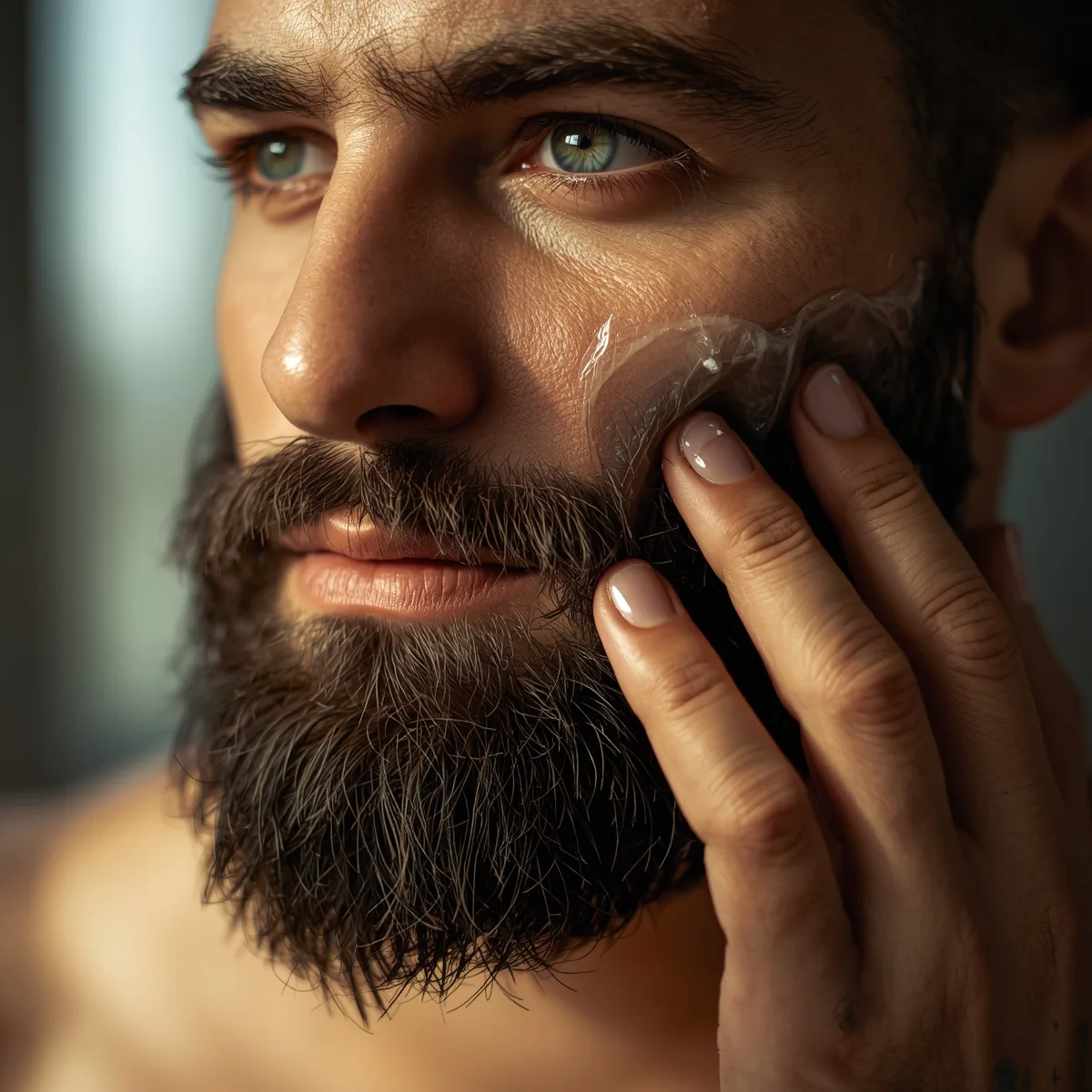
Bearded man working oil into his beard with his fingertips in front of a bathroom mirror

Why oil works — when it matches your beard

Beard hair is not head hair. The follicles sit differently, the shaft is usually thicker, and the cuticle — the shingle-like outer layer — tends to lift more, which is why beards feel rough even when the hair underneath is healthy. An oil's job is simple: fill the gaps in that lifted cuticle, seal moisture into the shaft, and keep the skin underneath from drying into flakes. When the oil is matched to the hair, all three happen with a few drops.

The mismatch problem is viscosity. Light oils like grapeseed absorb quickly and feel pleasant, but on a thick shaft they penetrate and vanish without sealing anything. Heavy oils like castor seal aggressively but sit greasy on fine hair. Coarse beards need a blend that leans heavier than what most bottles ship, because most bottles are formulated to feel nice in the hand at the store, not to survive eight hours on wiry growth.

That is the quiet reason so many men decide beard oil 'doesn't work.' It works. It just has to be built for the beard that is actually on your face, and the beard on most product pages is not it.

The thirty-second coarse beard test

Pull one hair from your beard — chin, not cheek — and roll it between your thumb and forefinger. If you can clearly feel a ridge as it rolls, like fine fishing line rather than sewing thread, you are in coarse territory. A second check: wet your beard in the shower and see how long it takes to feel dry again. Coarse, high-porosity hair often feels dry within minutes because the lifted cuticle lets water escape as fast as it gets in.

Neither test requires equipment, and together they tell you more than any quiz on a supplement site. Coarse plus fast-drying means you need heavier sealing and you will tolerate it well. Coarse plus slow-drying means the cuticle is tighter than it feels, and a mid-weight blend applied to a damp beard will do more than a heavy one applied dry.

Men with genuinely fine beards — the roll test feels smooth — should ignore most of this page. A light oil used sparingly is enough, and heavy butter blends will cost you more in shine than they return in softness.

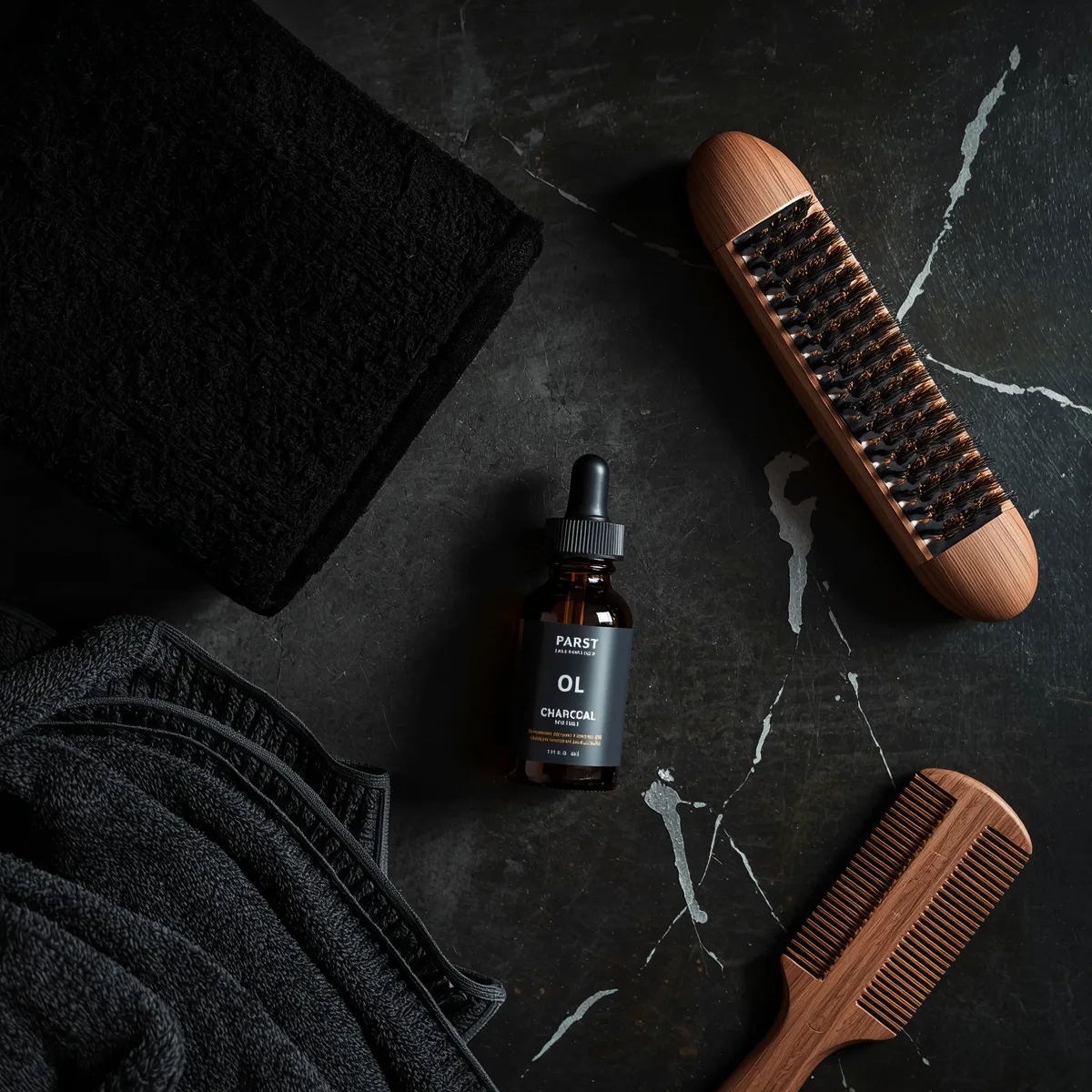
Grooming tools — amber glass oil bottle, wooden wide-tooth comb, and boar-bristle brush — laid out beside a sink

The five-minute routine that survives real mornings

Minute one: warm water rinse in the shower, no shampoo. Daily washing strips the little sebum a beard produces, and sebum is the one conditioner you cannot buy. Save actual beard wash for two or three times a week.

Minutes two and three: while the beard is still damp — damp, not dripping — work four to six drops of oil in from the skin outward. Fingertips first to reach the skin, then palms down the length. The water matters: oil applied to a damp beard traps that moisture against the shaft, which is the whole mechanism of softness. Oil on a bone-dry beard just coats the outside and shines.

Minutes four and five: a wide-tooth comb to distribute and detangle, then a boar-bristle brush to lay direction into the growth. The comb does the mechanical work; the brush drags oil down the shaft the way a paintbrush loads bristles. Skip the brush and the tips of a long beard stay dry no matter how much oil you use at the root.

That is the entire ritual. No serums, no twelve-step chart, nothing you will quietly abandon in three weeks. Consistency at five minutes beats perfection at twenty every time.

Beard itch and beardruff: treat the skin, not the hair

The itch that makes men shave at week three is almost never the hair. It is the skin underneath, drying out because new growth is wicking away its moisture while blocking your ability to moisturize it directly. Flakes follow the same logic — that white dust on a dark shirt is dehydrated skin shedding under a canopy of hair.

The fix is embarrassingly mechanical: get oil to the skin, not just the beard. Fingertips, small circles, before the beard is long enough to fight you. If flaking persists past a few weeks of consistent skin-first application, the cause is often fungal rather than dry skin — the same organism behind scalp dandruff — and an occasional wash with a zinc pyrithione shampoo handles what oil cannot.

What does not fix it: scratching (micro-tears invite irritation), hotter showers (strip more sebum), or doubling the oil without changing where you put it. More product on top of hair does nothing for skin two centimeters below.

Reading the label: four ingredients that matter, two that don't

Jojoba sits first on our label because it is technically a wax ester, not an oil, and its structure is the closest plant analog to human sebum — skin accepts it without the clogged-pore tax heavier oils charge. Argan brings vitamin E and oleic acid for shaft flexibility. Castor, used sparingly, is the sealant that keeps coarse hair sealed through a workday. Shea butter, in the balm rather than the oil, gives hold for training growth direction.

The two you can ignore: 'biotin-infused' — biotin does useful things when you eat it and nothing when you rub it on dead hair shaft — and 'proprietary growth complex,' which is a phrase that has never once been followed by a citation. Beard density is set by genetics and hormones. Oil makes the beard you have healthier and better behaved; nothing in a bottle changes what your follicles decided at puberty.

Fragrance deserves one honest sentence: ours is cedar and smoke at a concentration meant to disappear within the hour, because you wear a beard all day and a cologne argument with your own face gets old by ten a.m.

What to expect, week by honest week

Weeks one and two are stubble physics: hair short enough to be rigid, angled into skin, maximally itchy. Oil helps the skin but cannot change the geometry. This is the quitting window; most men who shave do it here, one week before it gets better on its own.

Weeks three through six the hairs lengthen enough to bend rather than stab, and patchiness starts filling from behind — cheek growth lags chin growth by weeks, which is normal and not a verdict. This is where the brush earns its place, training direction while the hair is still persuadable.

Past two months you have a beard rather than a project, and the routine shifts from defense to maintenance: oil daily, wash twice weekly, trim the escapees, and reassess length goals quarterly. A beard at six months is a different material than a beard at six weeks — drier at the tips, heavier, more opinionated — and your oil amount should grow with it, roughly a drop per extra inch.

The honest cost-per-morning math

A 30 ml bottle at five drops a day lasts roughly ten weeks — call it under fifty cents a morning for the months your face is the first thing clients, dates, and cameras see. The barbershop equivalent — a hot-towel beard treatment every two weeks — runs many times that for a result you rent rather than own.

We sell the oil and balm together as a kit because the split of labor is real: oil conditions skin and shaft, balm seals and shapes. Men who buy one usually return for the other within a month; bundling just skips the second shipping fee. If you only take one, take the oil — sealing matters less when conditioning hasn't happened.

Trimming a coarse beard: shape it damp, cut it dry

Coarse hair has opinions about direction, and a trim that ignores them turns into a shorter version of the same chaos. The sequence that works: wash day, oil while damp, brush everything into its trained direction, then let it dry completely before a single cut. Wet coarse hair stretches; cut it wet and it springs back a centimeter shorter than you planned, which is how neckline accidents become beard restarts.

Define the two borders and leave the rest alone for the first months. The neckline lives two finger-widths above the Adam's apple, curving up toward the ears — higher than that and the beard reads as chinstrap; lower and it merges with chest hair in a way nobody has ever requested. The cheek line, for most men, should be cleaned only where growth is obviously stray; carving a sharp cheek line into a naturally full beard is the most common self-inflicted wound in home grooming.

Scissors beat clippers for length work on wiry growth once you pass a few centimeters — clippers tug coarse hair at exactly the moment you need precision, and a cheap pair of proper barber scissors costs less than the beard trimmer's replacement blades. Clippers keep the borders; scissors negotiate with the body. And after any trim, oil again: fresh-cut ends are open ends, and they drink.

BeardLava Coarse-Beard Oil

$24

A jojoba-led blend weighted for thick, wiry growth: argan for flexibility, a measured castor fraction for all-day sealing, cedar-smoke scent that fades by mid-morning. 30 ml glass bottle with a dropper you can dose one-handed.

  • Jojoba, argan, and castor — no silicone, no mineral oil
  • Weighted for coarse and high-porosity beards
  • Cedar-smoke scent, faded within the hour
  • 30 ml lasts about ten weeks at daily use
Get the oil

The Full Ritual Kit

$59

Oil, shea-based styling balm, wide-tooth comb, and boar-bristle brush — the complete five-minute routine in one box, with the printed routine card so you never have to remember which step is which.

  • Everything the five-minute routine needs
  • Balm holds direction without helmet stiffness
  • Boar bristle drags oil to the dry tips
  • Saves the second and third shipping fee
Get the kit

Straight answers

How many drops should I actually use?

Start at four for anything under two inches, add one drop per additional inch of length. If your beard shines an hour after applying, drop back one; shine means the hair took what it could and the rest is sitting on the surface.

Oil or balm first?

Oil first, always — it conditions skin and shaft and needs direct contact. Balm goes on after, sealing the oil in and adding enough hold to train direction. Balm-first traps nothing and blocks the oil from reaching skin.

Will beard oil make my beard grow faster or thicker?

No, and be suspicious of anything that claims otherwise. Growth rate and density are set by genetics and hormones. What oil does is stop breakage and flaking, so more of the growth you produce actually survives to length — which looks like faster growth without being it.

My beard still feels dry an hour after oiling. What am I doing wrong?

Usually one of two things: applying to a bone-dry beard, or never getting product past the surface. Apply to a towel-damp beard and use fingertips against the skin first, then palms down the length. If both are right and dryness persists, you likely need one drop more than you think.

Can I use it on stubble?

Yes — stubble weeks are when the skin underneath needs it most. Two drops rubbed into the skin morning and night does more to get you through the itchy phase than anything else sold for the purpose.

What if it doesn't work on my beard?

Email us within sixty days and we refund the bottle, used or not. Coarse beards are our whole thesis; if we missed on yours we would rather know than keep the money.

Get the printed five-minute routine

We email the routine card, the coarse-beard test, and a launch discount when the next batch pours. No drip campaign, no daily nonsense.